Today, tech is replacing many aspects of traditional living. Gamified apps are one such innovation in learning. Are they replacing homework from the curriculum?
Homework. A word that most children frown at and parents often have to push for. It has always been a part of a child’s learning since time immemorial. But with technology becoming a bigger part of school life, we are seeing a shift. Now, the question is no longer just “how much homework is too much?” but “Can gamified apps replace Homework altogether?” Let us break this down and give it a real look from both sides as educators, parents, and people living in a digital-first world.
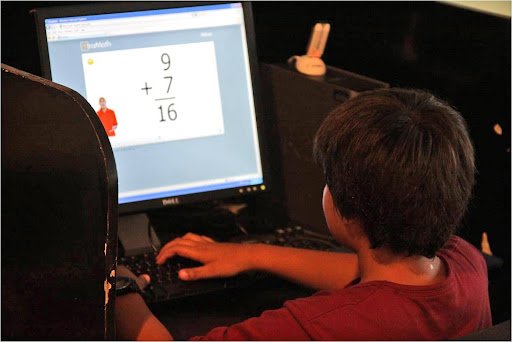
Gamified apps are basically learning tools wrapped in the skin of a game. Imagine solving a math puzzle and winning coins for it. Or unlocking a new level because you spelled ten words correctly. That is how they work. They mix lessons with rewards, making kids feel like they are playing, not studying.
These apps usually have bright visuals, fun music, short tasks, and small goals. Kids can win stars, unlock levels, or compete with classmates. The real purpose is to make learning less dull and more inviting. But how well do they really work when it comes to replacing actual homework?
Let us look at some of the most popular gamified learning apps today, what they offer, and whether they are enough to replace traditional homework.
1. Khan Academy Kids
This app is full of colorful characters, stories, and simple tasks that cover reading, writing, basic math, and problem-solving. The app adapts to each child’s pace and keeps things cheerful and light-hearted.
However, it can not replace homework entirely. While it is great for early learners to build basics, it does not demand focus for long stretches or involve tasks like handwriting practice or full-sentence answers. It is more of a supplement than a substitute.
2. Duolingo
Well-known for language learning, Duolingo offers short, fun lessons with voice, visuals, and rewards. You can earn points and badges for streaks, correct answers, and speed.
Talking of replacing homework, for vocabulary and speaking drills, yes, it may. But it will not help with writing long answers, grammar exercises, or cultural understanding, which are key parts of language understanding exercises.
For basic and repetitive math practice, yes, it may replace additional homework. However, it lacks written reasoning, word problems that require deep thought, or assignments that require kids to explain their methods, all of which are important parts of math homework.
It can replace worksheets for basic counting and number practice. But for tasks that involve writing steps, drawing shapes, or solving in notebooks, it does not quite cover everything.

In short, these apps can not completely eradicate homework from the curriculum. These apps work wonders for practice, revision, and concept building. They are especially helpful for kids who struggle with attention or need learning broken into smaller chunks. But they miss out on key things that homework builds, i.e., writing, patience, planning, and deeper thinking.
Also, homework teaches more than just lessons. It teaches responsibility, routine, and the habit of learning outside the classroom. That is hard to replace with screen time alone. So in my view, this question of whether the gamified apps can replace homework is nonsensical. These gamified apps can complement the routine of homework, not substitute it. They can be used for attention-grasping toward the subject and the generation of interest in the initial phase, followed by comprehensive learning through assignments and homework.
Gamified apps are not a rival of homework, and homework does not have to be painful either. Instead of choosing one over the other, a balanced approach may work better. Let the apps handle practice and engagement. Let homework focus on reflection, writing, and real-world tasks.
When used together, they can support each other, making learning both fun and meaningful. It would lead to a better learning experience. Homework and exercises are an intricate part of education and must be supported by the tech, not replaced by it.
At Wokegenics, we believe tech should never replace humans; it should support them. As a startup working at the intersection of technology and education, we are constantly exploring how learning can evolve. Our focus is on tools that enhance real teaching, not override it. Homework has its value. Gamified apps do too. The future of education lies in creating smart, balanced systems where both can coexist and bring out the best in each child. After all, education is not just about getting answers right; it is about thinking deeply, creating freely, and growing steadily. And that is what we are here to build.
Written by a content writer at Wokegenics, passionate about simplifying tech for everyday learning.
References:
https://www.prodigygame.com/main-en/blog/gamification-and-its-effectiveness-in-schools
https://prodigy-legacy-images.s3.us-east-2.amazonaws.com/legacy-images/Game-Based-Learning-Literature-Progress-Monitoring.pdf
https://en.wikipedia.org/wiki/Duolingo
https://www.researchgate.net/publication/351092761_Does_Gamifying_Homework_Influence_Performance_and_Perceived_Gameful_Experience
https://stemeducationjournal.springeropen.com/articles/10.1186/s40594-024-00521-3
https://bera-journals.onlinelibrary.wiley.com/doi/full/10.1111/bjet.13471
https://digitalcommons.kennesaw.edu/cgi/viewcontent.cgi?article=1048&context=teachleaddoc_etd
https://slejournal.springeropen.com/articles/10.1186/s40561-019-0098-x
https://www.researchgate.net/publication/382280640_EXAMINING_THE_IMPACT_OF_MATHEMATIC_GAMIFICATION_ON_PRIMARY_SCHOOL_STUDENT%27S_ATTITUDE_TO_MATHEMATICS_HOMEWORK
https://www.sciencedirect.com/science/article/pii/S2405844023062412