With immersive learning, avatar interaction, and personalized learning, metaverse classrooms, through virtual spaces, are teaching beyond blackboards.
There was a time we could not imagine a classroom without blackboards or benches. However, today we are discussing classrooms without walls altogether. That is the shift brought by technology through the metaverse. It is slowly making its place in the education sector, not as a replacement for schools, but as a bold new chapter. While words like “virtual reality” or “AR” can feel futuristic, they are already helping students to step inside ancient cities, explore the human brain, or conduct science experiments safely, without even leaving their room. It is not a fiction anymore. It is learning beyond physical limits, and it is happening.
Metaverse classrooms are digital learning spaces where students and teachers meet inside a shared 3D virtual world. Unlike video calls, where you are just watching a screen, these classrooms allow you to be present as an avatar, walk around, interact with objects, and learn by doing.
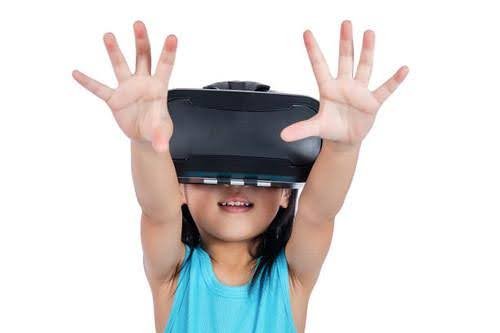
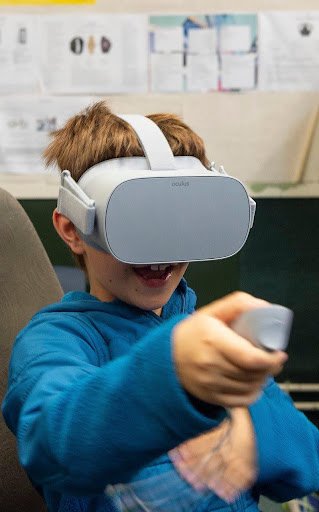
To enter such spaces, students use tools like:
Even smartphones and tablets can support such metaverse-style learning through AR apps like Google Lens, JigSpace, or Merge EDU, allowing students to view 3D content layered over their real surroundings. The idea is simply to make learning more alive, visual, and meaningful.

It is a fair question. We have grown up with chalkboards and notebooks. But today’s children are wired differently. They pick up devices before pencils. That is not necessarily a bad thing; it is just different.
In fact, studies suggest immersive learning improves focus and retention. According to PwC’s 2022 Future of Learning report, VR learners completed training 4 times faster and felt 275% more confident applying skills after sessions, compared to traditional classroom learners. More importantly, learning becomes less about memorizing facts and more about experiencing them.
Like every innovation, metaverse classrooms are not perfect. They come with challenges that cannot be ignored.
Metaverse classrooms can not replace schools. They are about making education more inclusive, visual, and flexible. If used well, they can fill the gaps in traditional systems and prepare students for a tech-powered world.
But balance is everything. Kids still need books, teachers, playgrounds, and friends. No headset can replace that. Though possibilities are many, we need to set a fixed recourse of learning that focuses more on overall development.
At Wokegenics, we understand the growing role of immersive tech in education. Whether you are an edtech founder or an institution planning to launch your first virtual classroom, we build solutions that make tech human-centered, secure, and scalable.
From VR-compatible learning platforms to education data privacy systems, our team works to ensure technology stays a tool, not a barrier. Want to explore metaverse learning for your institution? Let us build something meaningful together. Contact us for a free discovery session.
References:
PwC India Future of Learning Report (2022)
American Academy of Pediatrics: AAP Screen Time Guidelines
Digital Personal Data Protection Act, 2023 (22 of 2023) (India)
https://www.rapidinnovation.io/post/metaverse-in-education-an-immersive-learning-experience
https://ideausher.com/blog/virtual-classroom-metaverse-development/
https://economictimes.indiatimes.com
https://www.statista.com/
https://www.axios.com/2021/09/29/virtual-reality-training-walmart-nfl
https://www.strivr.com/blog/exploring-future-beyond-traditional-elearning-vr
https://www.pwc.com/us/en/tech-effect/emerging-tech/virtual-reality-study.html